Article
How B2B Brands can Leverage LinkedIn
LinkedIn can be an effective marketing tool, especially for B2B companies. Other social media platforms...

Feb 17, 202311 min Read
Continue Reading
Let’s get this out of the way: Pinterest is not just for wedding boards, sourdough starters, and home design dreams you can’t afford yet.
If your brand is sleeping on Pinterest marketing, you might be ignoring one of the most quietly powerful platforms in your entire marketing mix. And no, I’m not being dramatic. (Okay, maybe a little. I’m a copywriter. It’s part of the job.)
At Perrill, we spend a lot of time building full-funnel strategies. SEO. GEO. Paid media. Email. Analytics. The whole alphabet soup.
Here’s the secret: Marketing on Pinterest can amplify almost all of it if you do it strategically.
Let’s talk about how Pinterest fits into your overall content marketing strategy, how to use it intentionally (not randomly), and why it might be your next weapon for quality traffic and conversions.
Before we build a Pinterest marketing strategy, let’s level set.
Pinterest isn’t a traditional social media platform. It’s a visual search engine. Think Google, but make it aesthetic and fun.
People don’t scroll Pinterest to argue in comment sections. They search with real intent for things like:
That intent matters.
For example, take a look at all of the pins and pathways that pop up when searching the keyword, “kitchen remodeling ideas”:
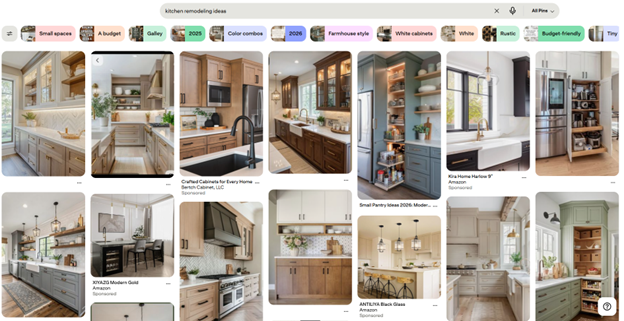
Unlike Instagram or TikTok, where content typically has a lifespan of hours to days, Pinterest content can rank and drive traffic for months (even years). That makes it a serious MVP in your content marketing plan.
|
Platform |
Primary Behavior | Content Lifespan | Link Friendliness |
| Search + Planning | Months to Years |
High |
|
|
|
Social Scrolling |
24-48 Hours |
Low |
|
TikTok |
Entertainment |
Seconds to Minutes |
Low |
|
|
Education + Social Scrolling |
24-48 Hours |
Medium |
Pinterest currently has hundreds of millions of active users globally, and a large portion of them are actively looking to buy, plan, or learn. That’s not passive scrolling. That’s high-intent behavior.
And for marketers? High intent = high opportunity.
Now, let’s talk benefits. Because if you’re going to pitch this to your CMO, you’ll need more than “it’s fun and cute.”
Pinterest’s algorithm is search-driven. That means optimizing your content with keywords relative to your strategy actually matters.
It’s basically SEO in a prettier outfit.
A strong pin doesn’t disappear in 24 hours. It continues circulating as long as people engage with it.
Compare that to your average Instagram post that fades faster than a New Year’s resolution.
If you’re asking yourself how to increase Pinterest traffic, the answer is simpler than it sounds: optimize for search, craft scroll-stopping visuals, and link thoughtfully.
For example, if you’re showcasing a bathroom renovation, don’t just post the photo, tag the products or link directly to the relevant pages. That way, users can go from inspiration to action in just a couple of clicks.
A Pinterest business account gives you:
Which means your content marketing strategy becomes data-backed, not vibes-based.
Here’s where it gets good.
Pinterest should not live in isolation. It’s not a “cute intern side project.” It should plug directly into your broader content marketing plan.
Let’s break it down.
You’re already writing blogs. (Hopefully well. Please say yes.)
Every blog post can become:
If your blog is optimized for search, your Pinterest pins can be optimized for search too. That’s double the opportunity to rank.
And because Pinterest itself ranks in Google search results, your pins can show up outside the platform as well.
Running Pinterest ads? Great.
Even if you’re not, your organic Pinterest strategy can inform paid campaigns by looking at:
Pinterest ads are particularly powerful for eCommerce, home services, lifestyle brands, and even B2B companies with visual storytelling.
If you’re asking, “How do I advertise on Pinterest?” it’s similar to other platforms:
But the real difference? Pinterest users are often in planning mode, which means they’re closer to making purchase decisions.
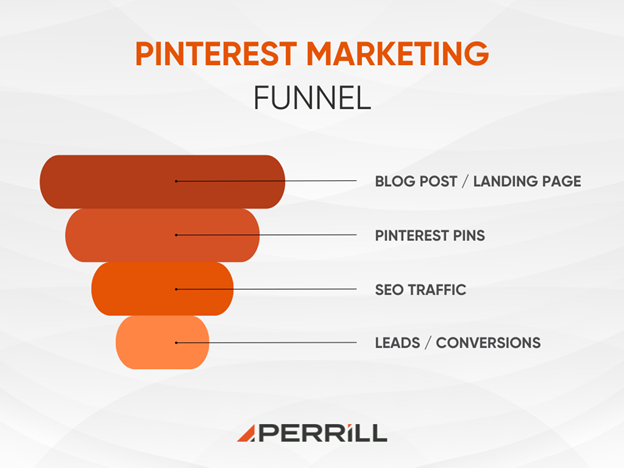
If you’re Googling “How to use Pinterest for business,” you’re not alone.
Here’s the not-chaotic way to do it.
If you’re wondering how to create a Pinterest business account, it’s simple:
Do not, I repeat, do not run your brand from a personal wedding-board account.
Before you post anything, answer:
A real Pinterest marketing strategy aligns with your:
Not just “we should probably be on Pinterest.”
Let’s get tactical.
If you want to know how to improve SEO on Pinterest, start with:
Use Pinterest’s search bar to find auto-suggested phrases. That’s real user search behavior.
If your goal is ranking for “small bathroom design,” your pins should actually say that.
Groundbreaking, I know.
You don’t need 50 pins a day. You need consistency.
A manageable cadence:
Pinterest rewards fresh content more than repinning the same graphic forever.
This is a big one. Pinterest affiliate marketing is currently a large topic.
You can:
But transparency is key. Always disclose.
Before you start cranking out templates in Canva, pause.
Depending on your industry, you need to decide whether your audience is searching for graphic-based content, real-world, practical imagery, or a mix.
For example:
Different industries. Different search intent. Different visuals.
Now that you’ve nailed the type of creative your audience wants, here are the Pinterest-specific best practices:
Let’s answer the traffic question directly.
If your goal is how to increase Pinterest traffic, here’s your checklist:
Pinterest is not magic. It’s data + design + consistency.
Let me lovingly call you out in advance. These are a few of the most common mistakes made in Pinterest marketing strategies:
Pinterest works best when it’s integrated into your larger content marketing strategy, not floating aimlessly.
Below are two examples that show the difference between a pin that grabs attention—and one that gets scrolled right past.
Example of a strong pin:

This pin makes its point immediately. The headline is bold, easy to read (even on a phone), and clearly tells the viewer what they’ll get if they click. There’s no guessing involved; you understand the value right away.
The design also helps guide the viewer naturally from the headline to the visual and then toward the destination link click. Everything works together: the layout, the image, and the message..
Example of a not-so-strong pin:
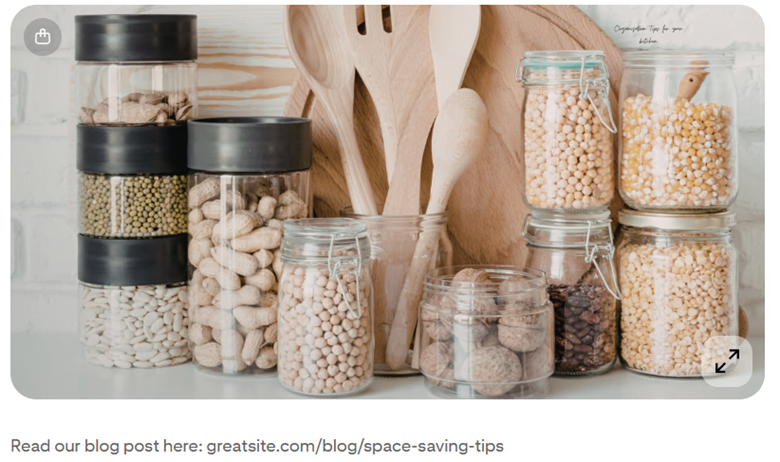
At first glance, this pin might look perfectly fine. But when you think about how people actually use Pinterest, it starts to fall apart a little. The headline is harder to read, the sizing is incorrect, the takeaway isn’t immediately obvious, and the design doesn’t clearly guide the viewer toward the next step.
And when someone has to pause to figure out what a pin is about, they usually won’t, and they’ll just keep scrolling. Pinterest rewards clarity, not complexity.
Bottom line: the pins that perform best are the ones that communicate value instantly. If someone can understand your pin in half a second, you’re already ahead of most of the feed.
If your account is… sad… here’s how to revive it:
If you’re wondering how to boost a business Pinterest account, it’s usually less about “boosting” and more about optimizing.
If you’re investing in your content marketing strategy, Pinterest should be part of the conversation.
Why?
Because your:
All deserve distribution beyond Google.
Pinterest extends the life and reach of your content. It supports SEO. It drives traffic. It warms audiences.
It’s not replacing your other channels.
It’s strengthening them.
If your brand is investing in SEO, blogging, and paid media, but ignoring Pinterest, you’re leaving opportunity on the table.
And not just “a little extra traffic” opportunity.
Real, high-intent, ready-to-click opportunity.
At Perrill, we believe good marketing isn’t about chasing every new shiny platform.
It’s about using the right platforms strategically.
Pinterest isn’t new. It isn’t flashy. It isn’t loud.
But it works.
If you want a Pinterest marketing strategy that actually integrates with your full-funnel growth plan (and doesn’t just look pretty), let’s talk about Perrill’s Content Marketing Services.
Your content deserves more than one channel. Send us a message today!